Losing Brightness

This photo shows a cardiogram

First, I felt the flush run to my face, a heat streaming up my arms that gripped my shoulders, raced up my neck, and finally settled in my cheeks. I looked down at Andy, who lovingly washed my feet, the shower’s steady pulse of water raining over both of us. The shower walls tipped, ever so slightly, to the right, and thin beams of light seemed to dance in between the water droplets. My stomach lurched, and I reached to the wall for support. My hand slipped against the wall’s wet surface; I gasped for breath.

My head seemed to loll a bit, a wilted tulip on a weak stalk. “Andy,” I said, blinking against the light. “I feel a bit faint.” I looked down at him, my head heavy and useless.

“What?” Andy yelled over the water, lifting my toes to lather their underside. “You feel fake?”

I inhaled deeply, trying to restore equilibrium, and got a mouthful of water. Spitting it out, I attempted to speak louder. “I feel faint!”

Andy quickly got to his feet. “What’s wrong?” His eyes were wide and scared.

The water pounded against his shoulders and my hands as I held onto him, tightly so I wouldn’t fall, and closed my eyes for a moment. He turned me so I would be under the water, perhaps to revive me, rejuvenate whatever part of my body was choosing to break down. I sputtered, again inhaling thick, watery air. “I don’t feel so good,” I mumbled.

I opened my eyes to see Andy’s frightened face close to mine. I focused on his eyes, the kind, reassuring ones I love so much; his wavy hairline; his Roman nose. “What is it?” I heard him say.

I heard him first, and realized with fright that I could no longer see him. Starting in my peripheral vision, a cluster of black stars had swarmed forth, dark masses with central pinpoints of light, obscuring anything real. “I can’t see you,” I tried to say matter-of-factly, breathing in to quell my panic, hoping this would be a temporary situation.

“Okay,” I could feel Andy’s grip on my shoulder and the small of my back, heard the shower turn off; I shivered in the cold, and then all senses were gone.

I came to holding on to Andy, my head against his shoulder, arms limp at my sides. I heard him calling my name. I still was in darkness.

“Can you see me?” he asked urgently.

“No,” I croaked in response–but as I formed the word I could see his shape, blurry at first, then distinct and true. I could see some light, and made out his face. “Wait … now I can.”

We sat there a moment. “Maybe we should go to the hospital,” Andy offered.

“No,” I said, trying to shake my drooping head. “I’m fine, I just need to go back to bed for a little while.” I reached my hand to my scalp, feeling the lingering oily sheen of the conditioner I had applied just before fainting. “Let’s just rinse this and I’ll lie down for a bit.”

I remember standing to turn the shower faucet back on, tentatively tilting my head back under the shower stream, and being overcome with a wave of sleepiness. I remember sitting down, and resting my head on Andy’s shoulder to “just take a little nap.” But this memory is false.

Andy, alarmed and teary, greeted me when I opened my eyes.

“What’s the matter? What happened?” I asked him.

He was trembling. “Honey, you just fainted again–twice. The second time, you went completely limp, started coughing convulsively and shaking, and your eyes rolled back,” he exhaled raggedly, wrapping his wet arms around me. “I thought you were having a seizure–you went completely white. I was just about to call 911.”

***

Before that Monday back in 2004, I had only fainted once in my life.

It had been in July 1999, one of the hottest summers on record in Washington, D.C. My apartment building was older, a massive brick multi-family built in the 1920s. Not having air conditioning, my roommates and I attempted to cool down our place by using strategically placed box fans to circulate air from room to room, but they did little damage against the heat and humidity, such formidable adversaries. I wondered daily why our nation’s founders choose to build the capital on swampland…and why I chose to live there.

The fainting day was typically muggy, the dense humidity resting in each room, still and thick. We waded through the pea-soup atmosphere, trying to move as little as possible, sticking to furniture and sweating over such simple tasks as answering the phone.

While I had little appetite from the heat, I languidly walked into the kitchen to snack on something (as I hadn’t eaten in a few hours), anything to hold me over for awhile. Perusing the fridge, I discovered a bag of deli bagels and cream cheese, and located the bread knife drying in the dish rack.

Slicing past the bagel, the blade found my index finger. I felt the sharp pain first, then saw the cut, shallow but bleeding fast. I rushed to the bathroom, the humidity blanketing me, my head swirling in the blood and heat. I leaned over the sink, flushing out the wound. My roommate followed me.

And then–My roommate stood over me, looking down, concerned.

“What’s going on?” I asked. “Why am I on the floor?”

“Are you okay?” she asked gently.

“Did I just faint?” I asked, feeling tears prick at my eyes. I was frightened at how my body could shut down like that, how in one moment I could be in a different place and consciousness, the danger of falling without being able to catch myself.

“Let’s get a Band-Aid on your hand,” she soothed me. “We’ll get you to bed in a sec.”

***

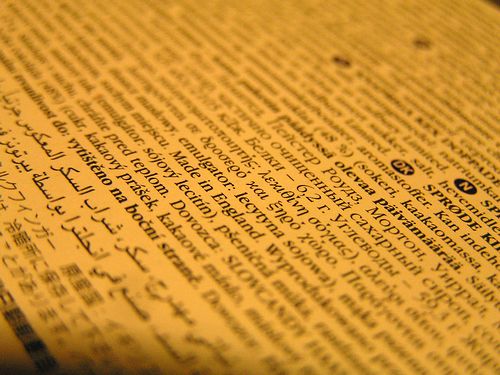
To faint, from Webster’s:

  1. archaic: to lose courage or spirit
  2. archaic: to become weak
  3. to lose consciousness because of a temporary decrease in the blood supply to the brain
  4. to lose brightness

To become weak and lose brightness–these certainly applied. I felt the greatest fatigue, even though I had only gotten out of bed not fifteen minutes before stepping in the shower. I fell into a deep sleep again, then rose for tea and toast. The day moved murkily, my head feeling loose and jumbled for a few hours after the fainting spell. Around mid-afternoon, I decided I felt well enough to take a walk.

Andy held my hand, and we moved slowly in the tawny afternoon light. Stopping to rest in Faneuil Hall, we watched the swarms of tourists and shoppers take in the sights of historic downtown Boston. I took them in from my perch on a bench, amazed at how quickly they were moving, how fast they chattered; their conversations rapid fire while they juggled a cell phone, shopping bags, and often a child or two.

I rested my head on Andy’s shoulder. “Do we move that fast?” I asked incredulously.

“Sometimes,” his gaze followed mine as I watched a pack of teenage girls pour out of a clothing store, packages in tow. “Do you want to go home?”

“No, I could walk a bit more, even though I still don’t feel 100 percent normal,” I answered. “I think I should call the doctor and get checked out,” I stated it casually, even though I’ve had a lifelong aversion to going to the doctor. Throughout my young adulthood, I’ve always prided myself on my good health, stamina, and ability to tough out an illness. My fainting, though, had been so sudden, so strange and unexpected, that I wondered what mysterious mechanisms were going on inside my body. I was fearful of waiting and toughing out whatever lay within.

“That could be a good idea,” Andy held out his hand, and helped me up for the second time that day.

***

The waiting room of the doctor’s office was warm. I loosened my coat, flipped through a magazine to distract my thoughts. One week after the fainting spell, I still carried myself gingerly, as if a “fainting time bomb” was ticking inside me, ready to steal my consciousness away at any moment. I walked somewhat slower than my usual pace. I never leapt out of a chair or got out of bed quickly. I took deep breaths, feeling my lungs expand, trying to get as much oxygen to my head as I could.

I was still jolted by the fact that, even though the blackout had only been a few seconds, that I had completely lost my sense of being, alertness, myself. What if I had been alone and had not been caught when I fell? What mystery was my body holding, what mechanism was so powerful it could completely shut me down?

I was surprised to have gotten the doctor’s appointment that week, as I was first informed that a regular check-up had a four-month waiting period. When I told them that I had fainted three times in five minutes the day before, the receptionist’s voice changed from indifference to concern. “Oh, so it’s not just a physical,” she clucked her tongue. “Want to see a resident? He can see you next week.”

“Sure, I’ll see anybody. I just want to make sure this isn’t going to be a recurring thing,” I answered.

And so I sat across from a young doctor just a few years older than myself, a sweet-faced man from India who was in Boston just for his residency. He had thick dark hair and stylish small-rimmed glasses, and a smart blue tie peeked out from the collar of his white lab coat. “What is wrong? You look so young and healthy!” he exclaimed as I settled in. I meekly explained what had happened.

“Hmmm,” he sat at a small computer terminal in the examining room, typing some notes out as I talked. “Have you ever had any problems fainting before?”

“No.”

“Heart disease–you or your family?”

“No for me, yes for family history–extended family.”

“But not immediate?”

I shook my head.

“Good. How about diabetes?”

“Yes, extended family.”

“Ok. How’s your cholesterol?”

“Don’t know, never had it checked,” I replied as he typed furiously.

“We’ll get that checked,” he furrowed his brow. “Now you had said, when you fainted, you had just woken up?”

“Yes, I hadn’t even been up fifteen minutes.”

“Nothing to eat?”

“No.”

“Ok, when was your last period?”

“It had just ended the day before.”

“A-ha!” the young doctor cried out, hitting the keys with jubilant force. “Hormone levels, no food in your stomach, still groggy from sleep… You said you were looking down when you first started feeling ill?”

I nodded.

“You probably were just hypoglycemic for a few minutes and that led to the fainting,” he smiled warmly, and I felt cured. “However.”

I waited.

“I still think we should do some tests on your heart over the next few days.”

“Whatever you think is necessary,” I replied.

“Ok. We’ll order an EKG for today, a blood test tomorrow to check your cholesterol level, also to make sure you’re not diabetic or anemic. We’ll also do an ECHO cardiogram. Have you ever had these tests done before?” He checked several boxes off on a chart, then looked up.

“No, never,” I said meekly. Were these routine procedures I had somehow missed?

“They’re just standard heart tests to make sure everything is normal–circulation, oxygen levels, sugar levels. I think the fainting was a one-time isolated incident, but we just want to make sure, and these tests will verify my hunch. Can you come in over the next few days? We can set up the appointments today.”

I nodded, looking down at my body, wondering if the upcoming tests would make me feel like a pincushion. I smiled. “Sure.”

***

The room was dark, and a bit cold. To lose brightness, I thought as the attending aide prepped her cardiogram machinery. A cardiogram, I had been informed, would be just like an ultrasound–except instead of examining a fetus, the doctors would be scrutinizing my heart. The attending stood in front of a large workstation that held a computer terminal, camera, programming board, and a wide electronic screen that displayed the camera’s recordings in crisp green on a black background. Naked from the neck to the waist, I watched as electrodes were placed across my shoulders and chest, prepping for the camera. I’m ready for my close up, I thought, and felt my heart beat faster in anticipation of its photo shoot.

The doctor held the camera’s lens, a long tube resembling a microphone, and pulled its cord for some extra leeway to reach me on the adjacent hospital bed. After pressing a few buttons on the computer and then positioning me on my side, she lifted the camera and slathered its tip with a thick blue gel. She paused, the camera held in midair, and gestured toward the screen.

“You can watch if you like,” she said. “I might have to ask you to move around a bit, but you’ll get a good view.”

“Okay,” I replied, craning my neck in curiosity against the stiff hospital pillow.

A green blob appeared on the screen when the attending touched the cold, gooey camera to my chest. It jumped in regular intervals, different pieces of tissue mugging for the lens. “There it is,” the doctor explained. She moved the camera around, recording several images, stopping at intervals to plug in data on the programming board. Each movement of the camera left a sheen of goo across my chest, and she reapplied the gel frequently. Soon I’ll be slathered, a blue blob, I thought to myself. A prime candidate for a walk-on part in Ghostbusters, or as a contestant on Double Dare.

“Do you see the different chambers?” She slid her finger over one section of the screen.

“Yes,” I stared at my heart on screen, seeing its beats corresponding visually with the taps I felt in my chest.

“Looks healthy on first glance,” she smiled broadly to reassure me.

I shifted when asked, keeping my eye on my heart when I could. I closed my eyes for a bit, relaxing in the dark room, and was about to drift off to sleep when I heard “Hmmm.”

“Is anything wrong?” I asked, now fully alert.

She reached toward the screen, and pointed to small dark area within the green mass of my heart. “Do you see this dark portion?” she asked, and I nodded. “It looks like you could have a small hole in your heart. It’s nothing to worry about initially,” she consoled, when my eyes widened in alarm. “But it may explain your fainting. It’s more common than people realize, and is developed in the womb–rather than the tissue coming together neatly, sometimes it doesn’t overlap just so,” she gestured with her hands, indicating a small space where her hands once had touched. “And a small gap is left.”

“Why this would lead to your fainting,” she continued, “is that rather than traveling along the path of your veins, some oxygen, nutrients, you name it, could fall through the gap, thus depriving you momentarily of oxygen, and poof–you faint.”

“Is this going to be problematic for the future? And do I definitely have this hole? Can you tell just from the image?” I felt unsettled, as if this hole was metaphorically speaking for my condition, my health.

“No, it’s not really anything to worry about,” she was saying, prepping the camera with yet more gel. My chest felt the odd combination of sticky and cold, and I longed for a hot shower–yet still feared it, as it was the site of my fall. “If you do have it, and we’ll test for it today, you’ll just be informed and aware of what can happen, and how you might be more susceptible to fainting in the future.”

“Another test?” I asked, watching my heart dance faster on the screen.

“We’ll do it right now–it won’t take too long,” she promised gently. “We might as well, since you’re already here.”

Two physicians were called in to administer a saline test; one a strapping man with a patch of strawberry-blond hair and a big booming voice, the other beanpole thin with wire-rimmed glasses, mousy brown hair, and a soft Eastern European accent. The big doctor settled himself down by the monitor, scanning the images already taken that day, while the European examined the veins in my right hand. I was informed a saltwater solution would be injected into a vein there, enabling the fluid to rush to my heart. If the solution, visible on the green screen because of the salt bubbles, rushed the way they were supposed to, there was no hole. If it plummeted to the nether regions of my heart, the existence of the hole would be confirmed.

Andy, who had been waiting patiently in the cardiac unit lounge while I was goo-ed and scanned, was called in. I waved meekly, happy to see him but also worried. I wondered if the doctor’s requesting his presence signaled that my condition might be very serious indeed.

I couldn’t look at my hand as the doctor poked and prodded the syringe into it, and instead turned my gaze to the screen. My heart ticked the seconds away, the green orb patiently doing its job.

“Ready?” the big doctor asked. I nodded.

The European released the saline, and before I could blink, a wave of bubbles, like a stream from a fish tank filter, whizzed across my heart. They sped in from the left of the screen and exited to the right.

“No hole!” Big doctor announced.

“You’re done!” the attending declared.

I looked at my heart, still chugging along on screen, and wondered if the ordeal really was done, just a one-time fluke.

***

The results of the cardiogram and blood tests came back, all status quo. And now, more than a decade later, my heart has been behaving. I’ve stayed vigilant: I’m more cautious when I take super-hot showers, I try to eat healthily (and at regular intervals) so my blood sugar levels stay normal. When I feel taxed or strained, I sit for a moment, outside if I can, to get fresh air. As a result, or perhaps just from luck, I haven’t fainted since.

I don’t know if the “fainting time bomb” is still inside me, waiting to go off when I least expect it. I can only hope that being aware of my body, as well as staying healthy, will stave it off. In the meantime, I keep watch, eternally conscious of my becoming unconscious.

Photo courtesy Kevin Dooley via Flickr Creative Commons

The Lost Art of Gift Giving

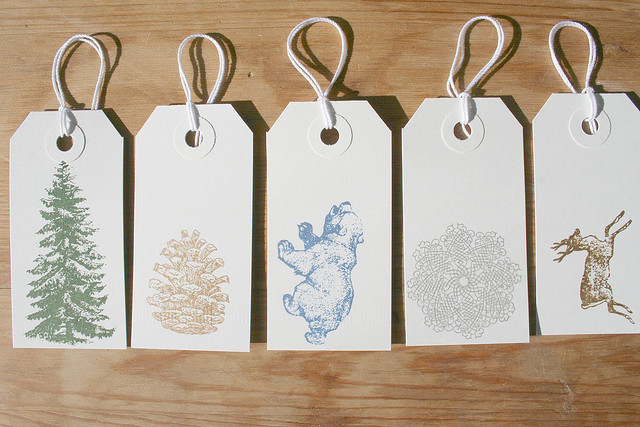
This photo shows gift tags for Christmas

The old adage says it’s better to give than receive, but current behaviors suggest otherwise.

A few years back, NPR reported on Amazon innovations in regard to gift returns: In short, you set up a list of parameters (e.g., no T-shirts, books by 18th-century authors, CD, etc.). If someone orders a gift for you that doesn’t match with your preferences, you then get either an Amazon credit for the gift-item amount or an item of equal value off your wish list. The giver gets a pre-generated thank you note for the original (never received/swapped-out) item or a “thanks for the thought, but I exchanged x for y” “gratitude” message.

Both options seemed, to me, appalling.  And yet, I was among the minority of NPR’s listeners in thinking this was hopelessly tacky (most listeners, to the tune of 65 percent, thought it was “awesome.”)

While this practice may have been modified since its launch (Amazon’s return center will take your gift return and exchange it for a gift card, without alerting the giver), the prevailing attitude still exists. In today’s me-centered culture, where the letter “I” adorns phones and computers, I wonder if I shouldn’t be surprised that we can’t handle the uncontrolled nature of truly receiving a gift.

The true definition of a gift has been lost – the generous donation of time and careful thought, made manifest in a purchase or a handmade item. A true gift reveals an element of surprise, shows that someone knows you and has paid attention to you. It can be practical or sentimental, useful or frivolous. But it says, in short, I see you. I know you.

I understand, as well, that wish lists partially exist to stave off the disappointment of an unwanted gift. But to deny ourselves of these presents, to refuse the possibility of the unexpected, is also to deny a great story.

For a recent birthday, an old friend gave me a grab bag of fun trinkets. Among its contents were tweezers, Silly Putty, a book of matches, and an unidentified chain mesh of sparkly beads, held together in a mystifying pattern. It became a game of sorts – a Rorschach test for friends and neighbors as we tried to determine just what exactly it was. My sister suggested it was a lamp shade decoration. Another friend proposed an oversized brooch, missing its pin. At last, one ingenious friend suggested it might be a wine cozy, and indeed it was. It’s sparkly and evokes the burlesque, making every wine bottle look like Gypsy Rose Lee – and we now bring it out for many get-togethers. It always sparks a conversation and shared stories about other off-the-wall gifts. We’ve all gotten them, and we may even have given some ourselves.

And that’s my main concern, my sadness, at the eager embrace of wish lists, covert return options, and similar tools of convenience and pre-selection. At their core, they diminish our community, as well as the knowledge of which relationships may need some more attention. They put the recipient front and center, at a time of year when togetherness and selflessness is celebrated.

In an age where we’re more connected than ever—via social media, email, smartphones, face chat, and more—we’ve somehow lost the means of really listening to each other. For what is a good gift giver but a good listener? We all have demanding jobs and lengthy commutes, and live in a multi-tasking culture with precious little downtime to actually connect. As such, we may find ourselves drawn to these easy, pre-determined gift-giving methods. But with such ease and convenience, and less idle time to spend together, we ultimately know less about each other.

Photo courtesy Sarah Parrott via Flickr Creative Commons

Right Palm

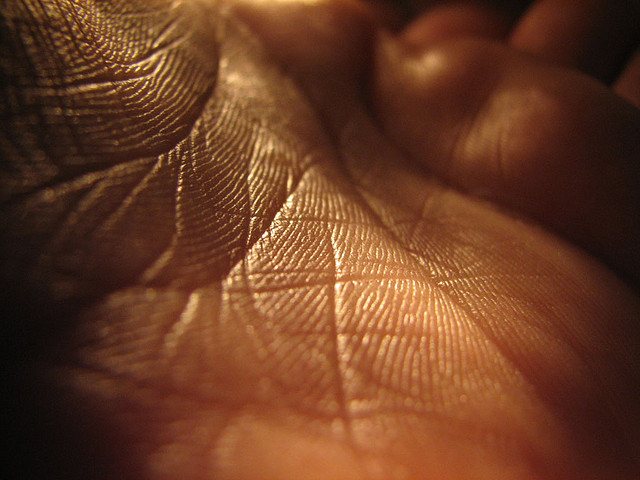
This photo shows the palm of a hand

The itch began on Caroline’s right palm as she changed her bed linens. Stuffing a pillow into its newly laundered case, she felt a tickle swirl around her wrist, then dart up her life line and back. She ran her hand across her jeans, still stiff from the dryer, thinking the taut fabric would take care of the itch, yet it persisted. By mid-morning, it had continued to the point of irritation.

“Isn’t there an old wives’ tale about an itchy palm?” Caroline said to her husband, Joe, the fingernails of her left hand gently raking the flesh of the right. The Sunday paper was just-finished folded, its shuffled-order stack ready for the recycling bin. Joe stood at the sink, still in his rumpled pajamas, and rinsed their coffee mugs. “It’s reminding me of something my mother used to say, but I’m not remembering it correctly. Something about if the left palm itched it meant you were going to come into some money. And if the right palm itched, then …”

“Maybe you’re going to owe someone else money?” Joe shrugged. He shook some kibble into the dog’s food bowl, then filled its companion with fresh water. “That sounds vaguely familiar. Or, you know, it could just mean you have an itchy palm.”

She nudged him aside at the sink and stuck her hand under the cool faucet. Caroline could feel the memory receding even as she tried to recall it, the adage’s details growing fainter as she tried to grip them in her mind’s eye. She dried her hands with a dishtowel. “No matter. Maybe I’ll remember it later.”

She whistled for Tony, then clipped on his leash and headed out toward the park. Outside, on the sunny path, she extended her palm upward to get a closer look. No mosquito bites, no poison ivy, no rash of any kind. She rested the leash’s end in her hand, letting the friction gently tease out whatever was plaguing her, just under the skin’s surface.

While Joe had speculated, the truth was that she did already owe money. And while he knew this in theory, she alone knew the total amount: Three months of student loan bills accumulated in her desk drawer, unopened, unpaid, the fourth anticipated to arrive this week. Three months had been relatively easy to ignore, and easy to justify: no job, no means to pay, she’d pay next month once she had started working. Deferment, though, was no longer an option. Time for a new story, or an actual plan of attack.

Read the full story in the debut issue of Inklette.

Photo courtesy jamelah e. via Flickr Creative Commons

How to Put Together a Realistic Travel Budget

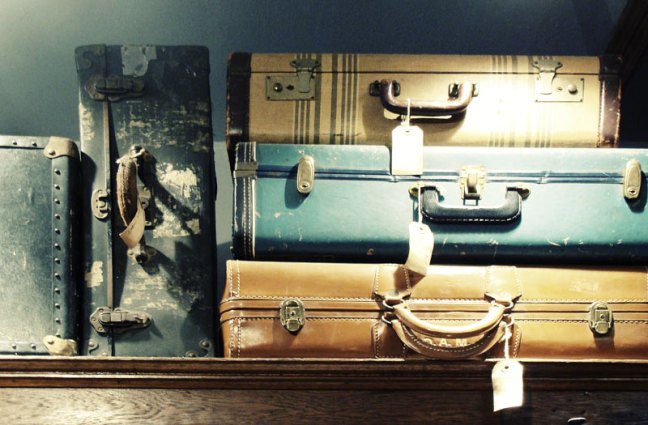
This photo shows a stack of vintage suitcases

Travelers often ask me about how they can save when planning a trip. Like the myth of travel bests, there’s no stock answer I can provide—the best way to budget for a trip is to really consider what you value when you travel.

Think back on your favorite trip. What stands out as particularly memorable? Was it an incredible hotel? A fantastic meal at a gourmet restaurant? Get really specific, zeroing in on what you especially loved. With your favorites in mind, you now know an area to budget—and maybe even splurge—for your upcoming vacation.

Conversely, think about a less-than-pleasant travel experience. Maybe it was a low-end hotel, an overrated pricey restaurant, or a rental car that didn’t suit your needs? Was it an area where, if you had spent a little more money, you would have had an improved experience? If so, you now also know an area where you’ll want to allocate a little more of your travel budget. If not, you’ve got an area to cut back—or something to avoid entirely on your next trip.

Let’s take a look at the major expenses of any vacation. Keeping your values in mind, let’s address where you should splurge or save.

Get the full story on the Society of Grownups blog.

Photo courtesy Natasha Mileshina via Flickr Creative Commons

A Ghost Story

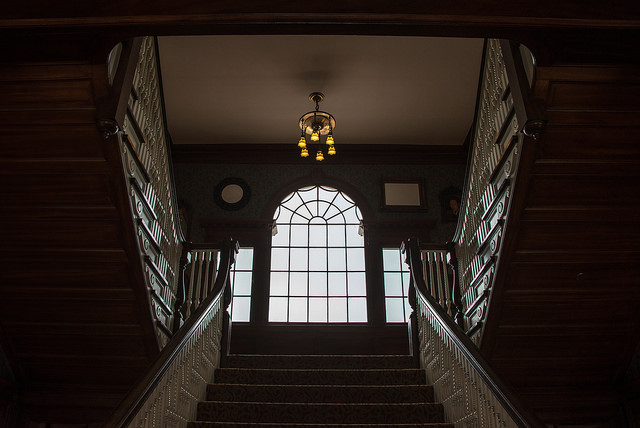
This photo shows the main staircase at the Stanley Hotel in Estes Park, Colorado

Matter is never created or destroyed. That’s what I’ve been told, at least since middle-school biology. Seen through this lens, can we explain the supernatural? What if spirits, specters, ghosts are not all in our heads or a trick of the light or eye – perhaps they are simply matter, or energy, redistributed?

I don’t really believe in the supernatural, except … sometimes a little piece of me does. How to explain otherwise my experience, a few years back, at The Stanley Hotel in Estes Park, Colorado, known to ghost chasers around the world as one of the most haunted sites around?

My husband Andy and I had signed up for an evening out during a trip hiking day trails in Rocky Mountain National Park. We heard the hotel restaurant was quite good, and the ghost tour seemed like a fun diversion to fill an otherwise quiet evening.

There were about 20 of us in our group, and our young guide regaled us with stories as we progressed through the historic property. We heard the requisite bits about Stephen King and Stanley Kubrick; the other celebrities and VIPs who requested to stay in the notoriously haunted rooms and lived to tell mind-boggling tales. I was entertained, but highly skeptical, until we got to the fourth floor.

Our guide brought us to a pause in a small vestibule with two couches and a coffee table. “This floor used to be the children’s wing,” he explained. “The [proprietor] Stanleys didn’t like children, you see, so for the most part they would be kept up here for the duration of the summer while their parents vacationed with the Stanleys and other guests at other parts of the hotel. Oftentimes we’ll get calls asking us to ‘tell those kids to stop running around the halls’ – and of course there will be no one there — or teachers or parents who are guests will take notice of odd happenings. Candy or chewing gum will disappear from their rooms or be moved around, or they’ll be relaxing in the lounge and will feel the space suddenly grow very cold, or get the sensation of a child’s hand taking theirs. It’s all very good-natured, but this is definitely one of the more active places in the building.”

At this point, Andy and I had been separated, he on one side of the tour group, I on the other. I waited for most of the others to pass so we could walk to the next point of the tour together.

The crowd shuffled along and Andy took a step toward me. As he did, the oddest expression crossed his face — a widening of his eyes in surprise, a flicker within (of fear? panic?), and then a huge grin. As I saw his smile grow wider, I felt a whoosh of air speed past me, an icy-cold current, as if a window had been opened and an arctic breeze took flight through the hallway. But there was no window, and no vents were in sight, either.

“What just happened to you?” I asked Andy.

The words tumbled out, rapid with excitement. “I took a step forward and the temperature felt like it dropped about 40 degrees,” he said. “It felt like I was standing in front of an air conditioner.”

I told him what I had felt, and we lingered a moment to see if anything would happen again, but were disappointed. Realizing our tour group was well down the hallway, we hastened to join them.

We are both educated, highly skeptical, 30-something agnostics. Yet neither of us can possibly explain what our senses perceived that evening.

“We want to assign patterns and meaning to everything,” my uncle counters, when I tell him this story. “Your mind plays tricks on you, especially with the power of suggestion.” He tells me about an email he received from a long-lost friend, just as he was about to send him a note. “That’s not divine intervention or fate or anything with meaning,” he says. “What that is, is a coincidence.”

Coincidence. I like the word, I like the concept. I like the random nature it implies – the little tweaks to our daily lives, the disruptions in our organized flow, that in their meaningless random occurrences ironically shake us out of our stupors and tune us into meaning. An unexpected email makes one reconsider a neglected relationship. A cold patch, seemingly unexplainable, gives us a great story, a travel anecdote that forever imprints the memories of our Colorado vacation. Are these events random? Probably. Supernatural or divinely guided? Well, if matter is never created or destroyed, who am I to say for certain?

Why do we enjoy a good ghost story? In today’s world of instantly accessible facts and information, often delivered instantaneously through a few taps on a keyboard or mobile device, a ghost story is often one of the last bastions of surprise, or inexplicable wonder. It’s part fantasy, as all good unprovable stories can be, but with definite roots in the physical. Tell me a good ghost story, and I will feel my heart rate start to quicken, my ears will pick up on the slight, white-noise background sounds I had not registered mere minutes before. A good ghost story creates community – we here, gathered in wonder to ponder the unknown, perhaps joined by others, invisible, out in the ether – and roots us inevitably to the past, the place, the possible.

I tend to partake in ghost tours (if they’re available) in new cities I visit. A few years back, I noted to one guide that they’re a really entertaining way to learn about the history of a place.

“Well, that’s the thing,” the guide said, dropping his voice to share a secret. “Ghost tours are really just history tours with a little bit of spook and lore thrown in. If we package them as history tours, no one shows up—we can’t give the tickets away. We call it a ghost tour, though, and with a few slight program modifications, people can’t get enough of it.”

I think back to some of my high school history courses, and struggle to recollect details and minutiae. Ask me to recall a ghost/history tour, however, and the stories come rushing back. Really, what I think we’re all looking for is a good story, whether it’s to tell our friends over coffee (or a campfire), or for the modern age, to distill down to essential characters and broadcast over Facebook and Twitter. We all want to spin a good yarn to those willing to listen.

Did a ghost brush past me that day in Colorado? Maybe, maybe not. Ironically, though, whatever touched me gave me the impetus to reach out to others, and interact via the story, whether it’s in the flesh , a voice over a phone line, or pixels on a screen. Ghosts, spirits, whatever you want to call it – it’s super natural to want to connect.

Photo courtesy Kent Kanouse via Flickr Creative Commons

Where Should You Go on Your Next Vacation?

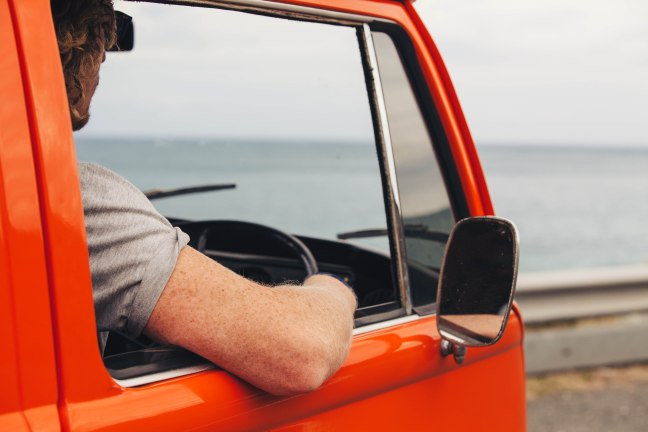
This photo shows a man leaning out of a van window

I’m not a night owl. When I travel, I like to have early starts and active days, where I’m out exploring a destination’s cultural landmarks or outdoor trails, capped off with a low-key evening centered around a fantastic meal.

So a few years ago, I begrudgingly found myself in Las Vegas on a business trip, a destination I never would have sought on my own. My days were spent in business meetings, my nights in mixer events at nightclubs or casinos. I was ready to write it off as a one-and-done trip, when a few colleagues invited me to go hiking on our one day off.

And suddenly, I was enchanted with Nevada. Here, about a 35-minute ride from downtown Vegas, were landscapes utterly unfamiliar to my East Coast sensibilities: red rocks, ochre sands, sweeping cliffs, a few scrubby trees. After the buzz of the Strip, I relished the fresh air and quiet, as well as the chance to connect with my colleagues in a setting that appealed to me. It placed everything in a new light, and made me realize my first impression had been limited (and that I was too hasty to judge).

The next year, when I went back to Vegas for another conference, I was more prepared. I didn’t have time for a hike, but I prepped for what my schedule would accommodate: In my downtime, I sought out a cooking class, took long walks down the Strip to get “outdoor” time, and had several delicious meals. And I realized: Few destinations will disappoint if approached with the spirit of adventure and discovery.

Get the full story over on the Society of Grownups blog.

The Song Remains the Same

This photo shows dairy farms in Buffalo Township, Pennsylvania

Winding country lanes threaded through emerald corn stalks taller than my car; major thoroughfares connected country towns alternately prosperous and depressed. Half a mile might separate neat garden-front homes from exhausted-looking structures with sagging porches and flaking paint, depending on the township.

I was driving along a stretch of highway I hadn’t traveled in years. A family health emergency had led to an unplanned trip to my hometown, and I navigated long-unvisited, yet intimately familiar, roads – the routes where I had first learned to drive.

It was a weekend afternoon, a blistering hot day with not much activity. People were no doubt taking it easy: We passed another car every mile or so. The iPod shuffled through my albums over the car stereo, and suddenly Michael Stipe’s voice flooded the car.

Half a World Away, from REM’s Out of Time. It was one of my definitive high school albums, and a CD I had on as a constant companion in the car, back in the mid-nineties, during those early days where my learner’s permit gave me my first terrifying glimpse of freedom, and the license (scored after three agonizing attempts) authorized it.

Some pieces of music seem tailor-made for certain landscapes. That afternoon, the vintage song, coupled with the instantly familiar hometown surroundings, called up long-dormant memories. I could immediately see and smell my first car: its compact seats, the lingering perfume upholstery-imprinted from its first owner, the steering wheel rubbery under my fingertips.

Researchers have found that music and memory are intricately connected in the deepest recesses of the brain, and I could practically feel my own synapses firing as I continued down the road. The opening strains of the song felt as poignant as running into an old friend. At that moment, the car and its stereo became a de facto time machine, effortlessly transporting me to an earlier era. I was suddenly seventeen years old again, worrying that I wouldn’t get into college, or worse – that I would get in, and wouldn’t be able to afford it. My sisters were driving me crazy; my parents even more so. In my mind’s eye, I could almost see us—of that era—getting ready for dinner, just the five of us, as though none of us had moved away, introduced new spouses to the family, or aged at all.

REM continued to play; the music soothed and consoled, just as it did back then.

That day, it felt as though I traveled with a shadow self. She seemed to spread out inside me, across me, stretching her limbs as though rousing from a long sleep. This younger version of me peered out with curiosity, almost incredulity. You’re married, she seemed to say. You’re already finished with college, and paying off loans. You don’t live around here anymore. The familiar suddenly seemed strange, the aural and visual triggers creating a discomfiting shuffling of time and space.

This is true, I thought in reply to the seventeen-year-old. But I’m still me. I haven’t fundamentally changed. Then—

This is ridiculous, the modern, present-day me thought. I’ve heard this album plenty of times over the years, and didn’t have this time-transport, flashback experience. Granted, it hadn’t been in the car, in this particular place.

But the eyes in my rearview mirror could have been mine or hers. The view through my windshield could haven been 1996, 2005, 2012.

The song came to a close, and the spell broke. The nostalgia lingered for just a moment, perhaps a mile down the road, disrupted completely as a more up-tempo pop song from the past year filled the speakers. I switched off the stereo and drove the remaining stretch home in silence, trying to will my shadow self to stick around just a little longer.

Photo courtesy Gerry Dincher via Flickr Creative Commons

How to Travel with Just About Anyone

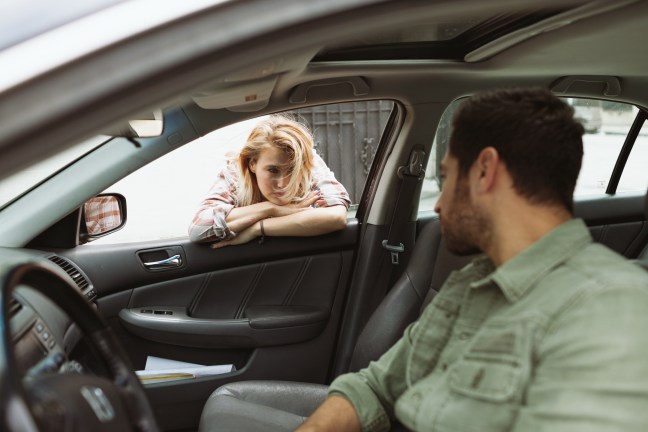
This photo shows a man in the driver seat talking to a woman leaning in through the passenger window

When I teach the “Beyond the Hostel” travel chat at Society of Grownups, I always ask my students about the best and worst trips they’ve ever taken. More often than not, their “worst trip” answers involve traveling with people who didn’t mesh well, ranging from clashing personalities to disagreements on food, activities, budget (you name it).

We’ve all been on trips where we didn’t necessarily get to choose whom we traveled with — and should you find potentially incompatible travelers will be joining you on your next trip, you’ve still got time to make the most of it.

Get the full story over at the Society of Grownups blog.


Him + Me = Wii

This photo shows the Wii Fit box and balance board

“Do you think that you’re paying enough attention to Andrew?”

The question about my husband came from the unlikeliest of sources. I had turned on my television and Wii Fit game console for a few minutes of balance games, coordination exercises, and yoga stretches. Like many days, I was prompted to take a “body test” to measure BMI, coordination, and the like. Today, however, the Wii Fit avatar took a different approach.

“I haven’t seen Andrew lately,” the Wii Fit said. “How has his posture been?” I was given four options for my answer: Better than before, Worse than before, No Change, or I don’t know. I thought for a moment, considering Andy’s posture and carriage through the years. No change, I selected. I pressed the key to go to the following screen.

No change, the Wii registered, then the accusation. “Do you think that you’re paying enough attention to Andrew?”

“What?!?” I squawked at the game. “You’re supposed to be a virtual personal trainer, not a couples’ therapist.”

Indignant, I took a photo of the screen with my cell phone and sent it to Andy (I believe I typed ‘WTF’ as the caption). I then went through the rest of my workout in a huff.

I’ve saved the picture on my phone and have delighted in showing it to friends and family. Most react with equal parts laughter and disbelief.

“Who do you think wrote such a program?” my friend Kerrie ponders one afternoon over coffee, after looking at the photo. “Why would a question like that even come up in a fitness video game? Maybe the programmer has relationship issues.”

That may very well be true. But a funny thing happened, almost subconsciously, since I got the pixellated reprimand from my video game. I’ve started paying a little more attention, at least to our health and fitness habits as a couple.

“Let’s make steak this weekend,” Andy suggests, and when I don’t enthusiastically reply right away, he asks what’s up. I note that we’ve already had red meat twice this week. Do we want to have it again, or is that a little indulgent? Will the Wii Fit take notice of our weight gain, and yell at me again?

Or there’s the reminder card from our dentist; we’re a few months overdue for a cleaning. Instead of ignoring it again, I tack it up on the fridge. “We should definitely make an appointment this month,” I say. “When are you free?”

And it’s funny—with this introspection, I’ve found that that I often feel closest to Andy when we’re attempting some fitness-related endeavor together. Thursday evenings have become gym-date nights, when we meet at the gym after work for our respective workouts and then go home and cook dinner together. (Or, for full disclosure, get takeout.) In our twelve years together, we’ve discovered a mutual love of hiking, a pursuit neither of us tried in our single days, and have tackled trails throughout New England, Nova Scotia, Colorado, the West Coast, and even Iceland and Australia. There’s something immensely satisfying about challenging your physical limits and seeing your partner do the same, and the shared experience of toughing something out, as a united front, naturally results in greater intimacy.

I read recently that the weight-loss show The Biggest Loser actually has the best success rate of lasting relationships resulting from a reality TV program (much more so than any of the actual dating/romance reality shows), and it makes a lot of sense—the contestants are each committed to personal improvement, healthy lifestyles, and fitness goals, and can encourage each other along the way. Sounds like an ideal recipe for good partnerships to me.

As for the Wii Fit and its pesky questions, I don’t know if I’ll ever be so detail-oriented as to notice posture—and its improvement or deterioration—over time. But strangely enough, a mechanical reminder to be cognizant of one’s partner’s overall health isn’t necessarily misguided or inappropriate, even if the source itself does take some getting used to.

Thankfully, whoever designed the Wii Fit program perhaps intuitively knew not to overdo it. I recently logged on for an exercise session and went through the start-up prompts.

“Good evening!” the Wii Fit said. “I haven’t seen Andrew around lately…”

I hesitated, wondering what irreverent comment was coming next. I took a deep, relaxing breath, then proceeded to the next screen.

“Let’s work on improving your balance!” the machine said.

“Yes, let’s,” I said to the screen, and proceeded to do just that.

This story originally appeared on DivineCaroline.com.

Photo courtesy M dela Merced via Flickr Creative Commons.

Debunking ‘Best of’ Travel Lists

This photo shows a globe and a headset

“What’s the best day of the week to book airfare?”

“Where’s the best hotel in Paris?”

“Who has the best lobster roll on Cape Cod?”

When it comes to travel, I often get some variation of these questions from friends and family — and it makes sense at first glance. We work hard and get precious little time off each year, as such, we want to make sure we’re making the most of our vacation. Hence the pursuit of bests — if we’re only getting a week in Jamaica, or a long weekend in San Francisco, we want to make sure we’ll enjoy it and have an ideal experience.

Any and all major magazines have their “10 Best” lists popping up for everything from airlines to airports, hotels to restaurants. (I may even be guilty of having authored a few such stories in my previous life.)

But here’s the secret: Even after 10+ years of studying consumer travel trends, I’m here to tell you that the word “best” is — at best — a fallacy. Think about it: It’s a means of finding a quality experience that will appeal to the most people, across all walks of life. It’s a way to quickly distill something complex and nuanced into an easy-to-digest format. And it’s a method for busy travelers to save time during trip planning — after all, consulting a “best of” list is the quickest way to research a new place.

But by focusing on the generic “best”, ironically, you might miss the experience that would be best for you. So it’s time to remove the term from your Grownup traveler vocabulary.

Get the full story over at Society of Grownups blog.