
Potential

(Video copyright MGM)

Back in 1987, Nicolas Cage was a young actor with a relatively thin resume, known primarily for quirky performances in offbeat films. In “Moonstruck”, he appears as Ronnie Cammareri,  one of his now-classic roles, the brother of the fiance of Loretta Castorini (played by Cher).

This film launched Cage as a major actor, and as he got more credits to his name, his reputation grew, culminating in a well-deserved Oscar for “Leaving Las Vegas” in 1995. In the nearly 20 years since, however, Cage’s body of work has tended toward the bombastic, scenery chewing, and cartoonish. Countless action flicks and thrillers piled up, and the once-idiosyncratic presence became simply over-the-top.

This complete career shift is partially why the above scene is so special to me: It shows Cage acting with something rarely seen since that Oscar win — subtlety.

In the scene, the two main characters acknowledge that they’ve fallen in love, despite only a short amount of time in each other’s company. (This scene depicts the conclusion of their first official date, having only met the previous day.)

Watch the expression of his face at the 0:23 mark, when Loretta bluntly admits that Ronnie’s The One. Surprise, amazement, and acknowledgment all flicker across his brow, his eyes. Watch his frustration grow as Ronnie realizes, despite Loretta’s admittance, that she still plans to marry his brother. Almost like an orchestra conductor, Cage tempers the ensuing frustration to the character’s advantage as the scene progresses, using inflection, volume, and gesture only when it’s most effective. Knowing what Cage is capable of, energy-wise, it’s almost a physical performance, this speech, ebbing and flowing with tight control.

One cringes to think of what Cage of the late ’90s and ’00s would have done with this scene — maybe treated it like the bakery scene earlier in the film, when Cage (with foreshadowing of his later career) gets to really let loose, both in volume and physicality. Maybe it was director Norman Jewison who reined him in here, maybe Cage’s early instincts were to keep things a little quieter — the viewer doesn’t know. One simply appreciates the overall tone and the choice to go subtle, all the more with the knowledge of Cage’s subsequent performances. In the above three-and-a-half minutes, the viewer gets a glorious throwback, a captured glimpse of the potential of a young, eclectic actor.

This post first appeared on the Good Taste and a Sense of Humor blog.
Reconstruction

(Video copyright 3 Arts Entertainment, Pig Newton Inc., FX Productions)

To be blunt, the holidays are a stressful time. I was thinking the other day that December, as a month, as a time of year, gets completely overshadowed by holiday prep. What is December without the commercial rush-rush-rush? Something completely foreign, that’s what. Does December even have a “feel”, an identity of its own, without the holidays? If it does, it’s been lost to closing that year-end sale, getting out of the red and into the black.

That’s why I dearly love the opening sequence to “Louie”‘s final episode of its third season. In just under four minutes, he takes the viewer to places of extreme frustration, and pushes the envelope in showing the extreme lengths a parent will go to in order to create his kid’s happy Christmas memory. The fact that the parent won’t even get the credit for this undertaking is an unspoken, additional grievance — despite all of Louie’s efforts, at this Christmas, it’ll be Santa who gets the glory. So many Hollywood productions would present the frustration in a more genteel way, replete with a final thought that addressed a moral lesson or saccharine sentimentality: If the traditional script conventions are to be believed, despite the Herculean feats, despite all the aggravation along the way, the appreciative kid will make the whole ordeal worthwhile.

Not so with Louie. Look at his face at the 10-second mark, and again at the close of the clip. His kid loves the doll he’s deconstructed and restored, but at this point, it hardly matters. He’s exhausted. The commercial holiday has chewed him up and spat him out. He’s done the role required of him, as a father, as a consumer. He’s got nothing left. He can barely muster up a smile.

Also, may I say that I truly love the deranged humor in this scene. Once in awhile a performer puts himself out there, going to a dark place and then taking the viewer even further into the shadows. The fact that the audience laughs while Louie takes them there–and through the twists and turns of an otherwise seemingly mundane sequence of trying to save a broken gift–is a testament to CK’s brilliant writing and fearless comedic performance.

CK’s creative control over his show has been well documented, and I couldn’t help but think that this arrangement is the only reason this scene saw the light of day. I can’t imagine a producer or third-party manager giving the OK to this episode. Christmas and negativity? Innocent dolls and handsaws and power drills? Sacrilege! So while the performance in itself deserves kudos, I also want to call out CK’s foresight in demanding artistic control for his work, for this episode in particular. More than most, this episode comes across as a singular vision, of a testament to what an artist willing to take a risk can do. In just witnessing the seamlessness of this sequence, and in laughing at its flawless presentation, the audience knows Louie’s risk has paid off.

This post first appeared on the Good Taste and a Sense of Humor blog.

Ode to Joy

(Video copyright Grub Street Productions, Paramount Network Television)

The trope of mistaken identity (and ensuing miscommunications) is a go-to for sitcom writers, easily played for laughs by appealing to the audience’s egos. The audience, always one step ahead of the actors, is always aware of the true identity (and what’s at stake), while the characters get clued in to the joke one by one. If it works, hilarity should ensue. If it doesn’t, the entire episode can come across as stale.

The “Frasier” episode above (season 2, episode 3) works, and primarily because of the terrific ensemble. Among the cast, though, one performer stands out: John Mahoney as Martin Crane. The setup: Frasier has invited his new boss, Tom, over to dinner as a potential suitor for Daphne, his father’s live-in physical therapist/housekeeper. Tom, as it turns out, is gay, and thinks he’s there on a date with Frasier. No one at the get-together knows this until Tom clues in Niles, Frasier’s brother, and thus the miscommunications get set straight (pun fully intended).

I have such affection for this episode, and it’s primarily because of Mahoney. The character of Martin has always been written as the average Joe in this ensemble — a working-class blue-collar retiree contrasted against his silver spoon sons, a beer-swilling guy-next-door among port-sipping prima donnas. The character could have been played as irascible, grumpy, mean-spirited — more than a few of his lines over the show’s run could have been delivered with a harsher tone, a gruffer interpretation. Mahoney, though, makes Martin not just likeable, but loveable — a grin always threatens to overtake his face, a bemused “can you believe these guys” gleam is ever-present in his eyes. His line delivery is often just a breath away from good-natured laughter. Despite Martin’s nature, he enjoys his sons, the push-and-pull dynamic of their opposite personalities, forced to coexist. And when Mahoney gets to put Martin’s true nature on display, it’s nearly always jubilant.

Mahoney was nominated for an Emmy just twice for his work on “Frasier”, and both times went home empty handed. While the Emmys are regularly bemoaned for getting it wrong, this oversight (and lack of subsequent nominations) seems particularly egregious. (Out of 11 seasons, the awards committee couldn’t find one year Mahoney deserved to win?!?)

But I digress. If you have time, watch the whole excerpt of the episode to see Mahoney’s glee build and build. If you don’t have 20+ minutes to spare, start the clock at the 15:30 mark and wrap up at 17:00. Mahoney’s burst of laughter is undeniably contagious, and the camera’s perspective of outside-looking-in makes the viewer want to run in and join him. I dare you to watch that scene and keep a straight face.

This post first appeared on the Good Taste and a Sense of Humor blog.

(No) Practice Makes Perfect

(Video copyright National Academy of Recording Arts and Sciences)

I love when the familiar is made new. I love when a performer leaves his or her comfort zone. And I love when these two things happen at the same time.

In 1998, Luciano Pavarotti was scheduled to perform the aria “Nessun Dorma” from Puccini’s “Turandot” opera at the Grammys. On doctor’s orders, he had to make an ultra-last-minute cancellation. Who steps in, with just twenty-two minutes to prepare? Queen of Soul Aretha Franklin. In the original clip, there’s a the collective gasp of surprise when Sting announces the replacement. And then it seems as though the entire audience is holding its breathwould she make a fool of herself? Could she do justice to the song? What the hell were the producers thinking?

Franklin seems to have the same concerns herself. Early on in the performance, just before she starts to sing, she makes a little exhalation, one that could signal a moment of centering, or a moment of oh-my-god-what-have-I-gotten-myself-into. It’s the equivalent of the nightmare where you’re standing in front of the classroom with no clothes on—but in this case, it’s actually happening, and in front of millions to boot. Perhaps not having any time to prepare was a mixed blessing, in this caseshe had limited time to worry, little time to build up the jitters.

The first few notes are tentative. She comes in a little late at one measure, but quickly recovers. A few more lines go without incident, and very subtly, her body language changes as the orchestra swells. She begins to enjoy herself. Any attempt to evoke Pavarottiif there ever was one to begin withis completely abandoned.

Halfway through the performance, just before the choir comes in, a tone shift seems to take place. Franklin knows at this point that she’s made the song her own. It’s not quite opera, it’s definitely not soulit’s something completely unique and only something she could do. The performance takes on a once-in-a-lifetime moment, something borne of an act of friendship. It’s also an act of consummate professionalismof one artist taking up the mantle for another in an hour of need. What an understudy, and what a lucky audience was at the Grammys that night! The show must go on, and Aretha always puts on a damn great show.

This post first appeared on the Good Taste and a Sense of Humor blog.

Irresistible

(Video copyright Republic Pictures/Artisan Entertainment)

Succumb — to give way to superior force; yield (Dictionary.com)

In my opinion, the above scene is the best depiction of the agony that comes with acknowledging that one is in love, and in doing so, relinquishing one’s independent life.

“It’s a Wonderful Life” is all about how the best intentions (such as a five-year plan, a career goal, etc.) can be pure folly. Prior to this scene, Jimmy Stewart’s character, George Bailey, has been living a life of compromise and delayed gratification. He takes on responsibilities for the family business, among other obligations to friends and neighbors in his hometown of Bedford Falls, New York. His true desire is to leave, to explore the larger world and see all that it holds.

And yet, he cannot deny his love for Mary, Donna Reed’s character. His desire for her — and all she represents — is in direct opposition to his lifelong drive to be someone, to voyage out, to be an adventurer.

Watch Jimmy Stewart’s physical performance in this scene. The conflict starts just as George gets within close proximity to Mary. With some distance, George can deny or stifle his attraction, but once he’s in her orbit he is in an all-out struggle of mind over matter, of logic over lust. Note how he can’t help but sniff her hair, how his grip on the telephone receiver alternately loosens and tightens, how his eyes both narrow and relax. The two actors are as close as can be within the frame, their two bodies huddled together around the telephone, and yet George seems to draw impossibly closer to Mary with each breath, as though she were pulling him in with a magnetic force. His facial expressions flutter between determined resistance and inescapable desire. The moment holds two very different versions of George’s future, and his choice will do no less than cement the ultimate course of his life: world explorer bachelor or devoted small-town husband.

The above clip has been edited to eliminate George’s fiery outburst when he makes his decision, but I think we’ve all seen it on countless reruns (and, if you haven’t, the full movie is available here). When his passion erupts and he chooses Mary, it’s such a thrilling display of emotion and physicality — a direct contrast to his struggle to repress his feelings in the scene’s previous few minutes. George will let his initial dream go, but not without a fight. It’s the best depiction I’ve seen of the moment one realizes they’re hopelessly in love, and that they’re about to inhabit a new self, one that may have been previously unrecognizable. It’s the moment one realizes they’ve found their partner, and the acknowledgment of what one is willing to sacrifice in order to stay in that same orbit as their loved one. For George, the decision is huge, life-altering, identity-changing. He succumbs in the true sense of the word — giving way to love, a superior force — and is willing to see who he is (and who he will become) on the other side.

This post first appeared on the Good Taste and a Sense of Humor blog.

All the Rage

(Video copyright Bright/Kauffman/Crane Productions, Warner Bros. Television)

For my money, no one does yuppie urban angst for laughs better than David Schwimmer. And he does it particularly well in the the post-Thanksgiving episode of “Friends”, “The One With Ross’s Sandwich” (season 5, episode 9).

A recurring thread of this season was Ross’s rage problem, a cumulative result of the character’s ongoing romantic and professional frustrations. In this scene, the switch gets flipped, and out comes the anger. The (seemingly minor) catalyst? A colleague at the office has eaten Ross’s lunch, a sandwich (made from Thanksgiving leftovers) he had been looking forward to eating all morning.

I love how Schwimmer accents the word “my” throughout this scene, how his colleague’s seemingly innocuous mistake takes on the full weight of the personal. We’ve all been there, just trying to slog through the work day, the little thing we’re anticipating (be it a sandwich, a cookie, a cup of coffee) the one bright spot in a otherwise dull day, or the one moment of relief and indulgence in an otherwise stressful day. That sandwich represents a moment of individuality in a city where you’re one among millions, in a corporation where you’re one among hundreds. That 3 p.m. snack–a handful of M&Ms, perhaps–evokes the many afternoons, so many years ago, when school let out and that sweet taste signified that the rest of the day was blissfully yours. Discovering the vending machine is out of M&Ms, or that a coworker has emptied the candy jar, is akin to waking from a pleasant dream, one that promised to rejuvenate and fuel the coming day, and instead finding yourself jolted, frazzled, and grumpy.

Which is why Schwimmer’s outburst is so hilariously relatable. We’re all just trying to keep it together, day in and day out, and most of us never get to have our own individual meltdown. We have jobs to keep, bills to pay, responsibilities to uphold, and so we bottle up our reactions. But for a moment, Schwimmer lets us live vicariously through Ross, and goes for the primal yell. His release–and our corresponding belly laugh–may be as effective, and therapeutic, as if we were able to react so honestly. The performer evokes our own authentic reaction–however inappropriate and juvenile, however over-the-top–and we laugh as we recognize ourselves.

This post first appeared on the Good Taste and a Sense of Humor blog.

When ‘Wrong’ is So Right

(Copyright The Swell Season; Plateau, ANTI- recording studios)

“Once” made a huge impact when it hit theaters in 2006. The little indie movie that could featured wonderful music, touching performances, and the awwww-inducing real-life behind-the-scenes love story of lead musicians/actors Glen Hansard and Marketa Irglova. Critical and widespread acclaim, including an Oscar for Best Original Song, soon followed.

Fast-forward to 2009. Hansard and Irglova are no longer a couple, although they’re still making fantastic music together as The Swell Season, demonstrated with the release of “Strict Joy”, their full-length album of songs inspired by Irish poet James Stephens. For me, the album reaches its peak on track 9, the Irglova-penned “I Have Loved You Wrong”. Whether it’s inspired more by Stephens or Hansard and Irglova’s own relationship is anyone’s guess. Perhaps it’s a mix of both.

It’s such a quiet song, but full of surprises. The two leads switch their trademark instruments — Irglova on Hansard’s holed guitar, Hansard on Irglova’s piano. Hansard, such a ferocious guitar player, is demure and controlled on the keys, letting Irglova steer the direction of her song in every way. The song’s hushed tone, and its last lyric of fond remembrance tinged with just a hint of regret, makes it come across as the ultimate demonstration of respect and reverence for a lost love. It’s the universal paean to “if only…”

And that last lyric–and refrain–is where the music, for me, becomes sublime. Irglova and Hansard sing together, “you’ve been/every now and then on my mind/yeah” for several measures, their voices in perfect unison. Strip away the lyric itself, and the timbre of their voices, the vulnerability and emotion behind the delivery, sums up where they once were, and the regard they still have for each other. In the span of two minutes, they manage to convey a love that’s morphed from lust to heady romance to heartbreak and, finally, to mature friendship.

As a listener, I feel a mix of sorrow and joy listening to this song — sorrow that these two kids couldn’t work things out, and joy that this gorgeous song (now available to the masses) was the result of such heartbreak. Sorrow because this song evokes the one who got away, who every now and then is on our own minds; joy because we’ve hopefully moved on to better, more sustaining relationships. The whispers of Irglova and Hansard’s voices, and the restraint of the arrangement, conveys that clash of resignation and hope, realism and acceptance.

This blog post originally appeared on the Good Taste and a Sense of Humor blog.

PSA (Proud Spouse Alert)

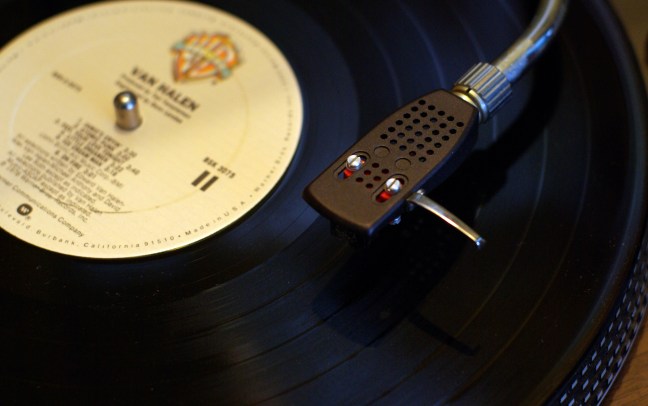
This photo shows an album on a record player

Sure, I know this is a space for me to share my writing and what I’m working on. But from time to time, I’ll take a minute to showcase a fellow writer, and in this case it happens to be my spouse.

After a long hiatus, my husband Andy is blogging again. If you’re a music fan (particularly indie rock), a vinyl aficionado, or just appreciate music criticism, check out The Record Nerd. I’m willing to bet you’ll find some new favorite bands here.

First up is a review of The Decemberists’ What a Terrible World, What a Beautiful World — and there will be much more to come.

Photo courtesy pumcus via Flickr

Ain’t no party like a Twitter party…

This photo shows a person checking a smartphone

Hi again, writers!

Great to see you at the Muse today!

As Hannah and I mentioned during our Muse and the Marketplace panel, we’d love to host a Twitter party with all of you in the near future. Featuring live website critiques, Q&A, and additional social media tips, our Twitter party will give you a chance to put your new social media skills to work!

Before we can get going–and send you a proper invite with details–we need a little bit of feedback. Please take a few minutes to share your feedback in our Twitter Chat post-Muse survey. We’ll compile the preferences and follow up — more to come!

Take the Finding and Growing Your Online Audience/Twitter Chat Survey here.

#muse15

Photo courtesy Death to the Stock Photo

Finding and Growing Your Online Audience

This photo shows Hannah Harlow and Sarah Pascarella, presenters at the Muse and the Marketplace 2015

Looking to increase your presence on social media? Here’s the presentation that Hannah Harlow and I put together for the 2015 Muse and the Marketplace:

FINDING AND GROWING YOUR ONLINE AUDIENCE

as well as the list of resources every writer should use when getting started online.

Have further questions? Tweet to me @PascarellaSarah or Hannah @hhharlow!