Family History

This photo shows vials in a tray below a dropper in a lab conducting DNA tests.

Bob looked down at the nondescript printouts, no more conspicuous than a quarterly report from the dairy. Gilbert Reeder, 90% sibling or cousin.

“That’s pretty conclusive,” he said, pointing to his son’s name.

Elise worried her thumb and index finger, nail against flesh. “If intent counts for anything, I thought I was doing the right thing. I chose a nice couple and considered it done. I told the agency I could be contacted strictly for medical records, and I never intended to involve you, if she ever reached out.”

“What if it were something I could have helped with, medically speaking? From my side of the family?”

Elise shrugged. “I figured mine would be enough.”

“And you thought it wouldn’t ever come out.”

Elise ran a hand over her brow. “Honestly, no. How could I have possibly imagined the internet — and then these genetics companies accessing this information, no private agencies needed? That people all around the world would willingly spit in cups, drop them in the mail, and tag every last possible relative, with no idea of what they were actually doing? No one could have predicted that, Bob. I was thinking about our whole lives ahead – our options.”

A coal of anger glowed in his gut. “How did I have options when I didn’t even have the full story?”

“Well, you do now.”

***

Since private companies made genetic testing available to the general public, I’ve been fascinated by what the societal and cultural impacts would be, especially in local communities.

Spares and Strikes, my latest short story in Unwoven Literary & Arts Magazine, navigates one family’s experience in discovering an unknown relative’s existence, well into that person’s adulthood.

Thank you to Ameila Dellos and the team at Unwoven for publishing my work, and to the SWIG writers group and Andrew Wagner for being the best early readers.

Read Spares & Strikes in Unwoven Magazine >

Photo courtesy Louis Reed via Unsplash

Giants and Canines and Whales, Oh My!

This photo shows colorful buoys side by side on a waterfront shack on the U.S. Atlantic Coast

I had a goal to get back to travel writing this year, so when Preferred Travel magazine commissioned an article on getaways along the U.S. Atlantic Coast, I was pleased to take the assignment.

If you’re on the East Coast this summer and fall, check out the recommended destinations across Maine, Massachusetts, Rhode Island, and Maryland.

For outdoorsy folks, I’ve covered bird trails, rail trails (including a literal railroad – decommissioned, of course), kayak “trails”, and even a Hydrant Trail for four-legged travelers.

For foodies, we’ve got recommendations for lobstah, French bakeries, frozen hot chocolate, and a bar that specializes in champagne and Scotch.

And for those wanting something eclectic, there are gardens full of giants and larger-than-life topiaries, rides on historic skipjacks, and a municipal airport that’s also a gourmet eatery.

Where are your favorite waterfront places along the Atlantic Coast? Let me know and perhaps I’ll pitch a sequel.

Read Allure of the Atlantic Coast in Preferred Travel magazine >

Photo courtesy Taylor Rooney via Unsplash

A Surprise from My Alma Mater

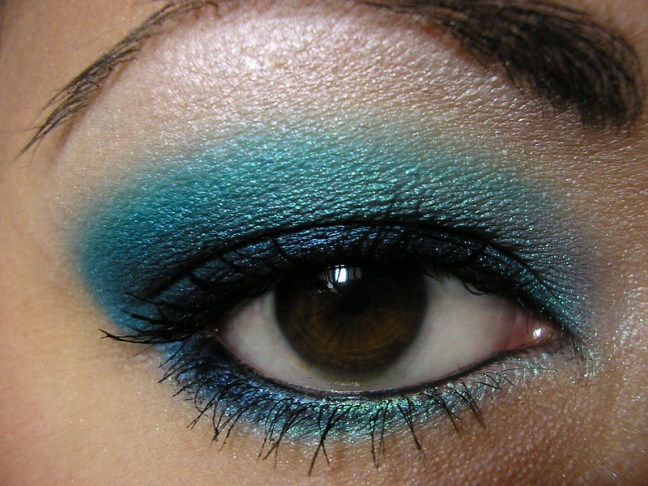
This photo shows a right eye with heavy blue eyeshadow and eyeliner

I never considered myself a genre writer, but when I saw that Emerson College’s Page Turner magazine, a journal focusing on thriller, horror, and romance, among other popular fiction genres, was soliciting new submissions, I thought my story Grace Land might fit the thriller category.

It did – and won the 2025 alumni contest!

I was so delightfully surprised to get this award, and a big thank you to the Page Turner team for this honor.

Read Grace Land in Page Turner magazine >

Photo courtesy kuuipo1207 Frantastic Makeup via Flickr Creative Commons

Matchmaking

Boston's South End neighborhood is seen from above at twilight

My typical pitching strategy is to send one story out to five places at a time, usually to places that have submission deadlines in the coming month. This covers journals that are quick to reject, as well as those with longer lead/read times. When a rejection comes in, I have to turn around fast – my goal is to send the story out again to another journal within 24 hours. This method ensures I always have five pots simmering on the stove, as it were.

Some stories get snatched up quickly in the first batch of five – like “Move Fast and Break Things”, featured in the Summer 2023 issue of Little Patuxent Review

Others take a little (or much) longer. These are the trickier tales, whether they have a prickly main character, quieter tone, longer length, all of the above, or something else entirely. With my more difficult stories, I typically hit a rejection threshold – if X number of editors don’t get it, I figure I need to take another pass at the draft, and start yet another revision.

But here’s the thing – my story “Tremont & Tremont” blew past that rejection threshold – and then even more. And yet I didn’t want to revise it again. It had already gone through multiple drafts and peer workshops over several years, and I was pleased with its latest iteration. I’ve been taking Jessica Brody’s Writing Mastery Academy revision course, where she notes that it can be possible for a draft to be over-revised, draining the original spark or energy from the piece. I took my reluctance to revisit the draft as an indicator that “Tremont & Tremont” might just that – a story that didn’t require another rewrite from me, but diligence to find the right home.

So, I’m quite pleased to announce that Gambling the Aisle has published “Tremont & Tremont” as its September 2023 feature. “The strange will always have a home with us,” says their About Us page – and that is indeed this story (and me). 

Thank you to Chelsea Lemon Fetzer at Little Patuxent Review and Jenna Park at Gambling the Aisle for championing and publishing my short stories. 

Eternal gratitude to Andrew Wagner and the SWIG monthly writers’ workshop for their invaluable feedback, and especially to Janice Dvorak.

Read Move Fast and Break Things by ordering the Summer 2023 issue of Little Patuxent Review > 

Read Tremont & Tremont in Gambling the Aisle > 

Photo courtesy The Colonnade Hotel via Flickr Creative Commons

A Loaded Word

A cracked pomegranate sits on a plate with loose seeds and juice scattered on the table

“Pith”, the title of my new short story in Wilderness House Literary Review, is one of my favorite words, dense and layered with meaning. As a noun, it refers to spongy plant tissue or a body’s soft interior; it can also mean the essential part. As a verb, it means to kill. It’s a word in constant dance with its context – move this way, and it could be a refuge; shift slightly, and it’s peril. By either interpretation, it’s impactful.

I hoped to weave these multiple meanings into the story, a simple one of Dara, a young woman attempting to connect with her elderly father, newly vulnerable at this moment in their relationship.

I also wanted to create a personality test for the reader, and purposely left the time period vague. Set this story in late 2018, for example, and the tone reassures. Place it in January 2020 and inspire dread. I leave it up to you whether to support or kill.

Thank you to fiction editor Ian Halim at Wilderness House for selecting my work, and to the women of SWIG and Andrew Wagner for thoughtful critiques.

Read Pith in Wilderness House Literary Review >

Photo courtesy Margaret Jaszowska via Unsplash

Unavoidable

The black coils of an Eastern Rat snake shine under a light

In my latest story, what happens when a person whose default setting is avoidance has to deal with the highly unpleasant, immediately, and all by themselves?

In Solo Shift, my new short story in The Petigru Review, Tanya, the owner of a small cafe and mercantile, finds herself face-to-face with a snake just before the Sunday-morning rush. As the story unfolds and she addresses the urgent at-hand, the long-put-off becomes clear.

Interestingly, this story first came together in September 2020 (the year of prompt stories) – and here we are, two years later, seeing it published just as September ends.

Thanks to the editorial staff at The Petigru Review, especially Sue Cryer and Maria Picone for such a fruitful collaboration, and my constant readers – the unparalleled SWIG workshop and Andrew Wagner.

Read Solo Shift in The Petigru Review

Photo courtesy David Clode via Unsplash

Work/Life

Two swimmers in side by side lanes swim the backstroke

Early in my career, work and life were separate. It was considered unprofessional to be vulnerable or personal at the office. Relationship drama? Family problems? Health issues? Check them all at the office door, focus on the bottom line, and bring maximum value to your employer, no distractions.

But as I’ve switched roles and companies over the years, I’ve noticed a shifting ethos in corporate culture, especially when I’ve taken jobs at startups. Employees are increasingly encouraged to “bring their whole selves to work,” but this got me thinking: What does that mean, exactly? Who defines “whole self”? And what type of an employee might prefer to keep things separate and private?

That’s the setup for my newest short story, Backstroke, published in the Summer 2022 issue of The Under Review.

Thank you to Meghan Maloney-Vinz and The Under Review editors for publishing my work, and to my SWIG workshop readers and Andrew Wagner for always-thoughtful feedback.

Read Backstroke in The Under Review >

Photo courtesy Ryan Fleischer via Unsplash

Tie Goes to the Writer (and Editor)

A view of a prison hallway seen through steel bars

In On Writing, Stephen King says the following about getting initial feedback from close, trusted readers:

If you give out six or eight copies … you get back six or eight highly subjective opinions about what’s good and bad in it. If all your readers think you did a pretty good job, you probably did. This sort of unanimity does happen, but it’s rare, even with friends. More likely, they’ll think that some parts are good and some parts are, well, not so good. Some will feel that Character A works but Character B is far-fetched. If others feel that Character B is believable but Character A is overdrawn, it’s a wash. You can safely relax and leave things the way they are (in baseball, tie goes to the runner; for novelists, it goes to the writer). If some people love your ending and others hate it, same deal – it’s a wash, and tie goes to the writer.” (pp. 216-17)

I recently used this advice with my new flash fiction story, The Sleepwalker, published this month in Every Day Fiction. When I workshopped this story with my writing group, it got mixed feedback: Some thought it worked fine, others thought it needed an overhaul, getting more in depth with the character and the actions that created their circumstances.

Potential wash, I thought.

Then, fellow workshop member – and award-winning flash fiction writer – Kat Gonso not only championed it, but also suggested a drastic revision. She recommended leaning in to the flash and distilling even further.

In her notes, she included a ~350-word version (cut from my original draft around 500), and suggested I pare it down even further. I sat with it a bit, tweaked a few sections based on her suggestions and additional workshop feedback, and sent it out to a few journals.

Every Day Fiction expressed interest, and then also shared their team’s notes. Their reader found it problematic. The fiction editor liked it and wanted to publish it.

Tie goes to the editor, and by extension, me.

Read The Sleepwalker in Every Day Fiction >

Photo courtesy Matthew Ansley via Unsplash

Unilateral

A neon-red anatomical heart wall hanging sits behind a steel grid

When I was growing up, my mother had a paper wall hanging, a scroll unfurled between two wooden sticks, featuring a dusky rose against a yellow-and-gold striped sunset. On the top, in thick dark letters, it read, “If you love somebody, tell them.”

In my newest short story, Structures of a Heart, Jonah can’t quite follow these simple instructions. For those who know him best, though, his reticence may not matter.

Thanks to the women of SWIG and Andrew Wagner for reading multiple drafts and always offering helpful feedback, as well as to the editors at Chestnut Review, and especially D.E. Hardy, for their care with this story. Read – or listen to – it now in the Autumn 2021 issue.

Photo by Olivier Collet on Unsplash

Letter to a Ghost

A sandy path between dunes leads to the hillier dunes in Provincetown

I first encountered Richard McCann, poet, essayist, novelist, professor, in the mid-90s, in Writers in Print and Person, a literature class at American University. His name, a guest author on the syllabus, accompanied the required reading of Ghost Letters, his poetry collection. It was a modest gathering, maybe fifteen undergraduate students, and on the designated day he took a seat at the head of the discussion table, maneuvering his swollen abdomen into a too-small chair. He had a mottled complexion, large hands, thin blond hair that brushed his eyebrows and earlobes. Ice-blue eyes that concealed glaciers of sorrow.

Before we delved into the Q&A, he charmed—and disarmed—us all with a few witty, self-deprecating jokes. Still, even in laughter, his eyes were the saddest I’d seen, then and maybe still. He’d been through the unbearable: he was the last person standing in his family of origin, his partner lost to HIV. The multi-decade culling of his community; his own health crisis. He’d seen some shit. He wrote it all down. He polished the retellings, so what would stagger or even fell others became poems. He made the profane beautiful, and the beautiful sublime.

I learned of his death, Monday, January 25, 2021. I knew he had been chronically ill since the nineties. I knew he was 71. But it still stunned. He was the endurer. He was the recorder. I texted an old friend, who had also studied with him: It’s like the witness isn’t supposed to be mortal.

The spring semester of my junior year, I registered for McCann’s course, Literature of AIDS. This was 1998, and while the pandemic may have been somewhat muted compared to the previous decade, it still loomed and threatened. “Who signs up for this—are you all masochists?” he asked the small group of us, maybe twelve, on the first day of class. Perhaps we were. I only knew that, while we were heading into some dark places, I trusted McCann would be a revelatory guide. He was. Here were instructions on how to live with pain. Templates on how to declare one’s worth. Introductions to artists-as-warriors: Mark Doty, Jean Valentine, Tory Dent, David Wojnarowicz, Paul Monette, Tom Joslin and Mark Massi, voices that howled and wept and celebrated and refused to be silenced, even in death. Here were participants and witnesses, each class session such a shock wave of love and loss that we often stumbled out into the university quad, stunned into post-lesson silence.

Over the years, what I found enduring and remarkable was McCann’s invitation to witness, to have given our small collective a glimpse into how to stare down what tries to come for you, to break you and your loved ones, your whole community. The betrayer mattered not and could take many forms: a pathogen. A policy. Your own pathology. What mattered was, even in the midst of the attack, one could still say, I can create from this. I must create from this. McCann wrote and taught about the body—the ailing body, the desirous body, the decaying body, his own and others. How strange to think he has finally left his – to have at last cast off the source of frustration, creation, betrayal and beauty – and now leaves only a body of work.

At our last class, the appointed hour came. McCann said something poignant and kind to wrap up; I don’t recall the exact words, just the commingled sadness and gratitude that comes when any meaningful experience concludes. What I do recall is no one moved or spoke, as though we could will more time into existence. Of course, who knew better than McCann that we couldn’t? He looked at us, immobile and mute, and waited.  

“Go,” he finally said, and we did, reluctant, reverent.

Photo courtesy jenny k via Flickr Creative Commons