Family History

This photo shows vials in a tray below a dropper in a lab conducting DNA tests.

Bob looked down at the nondescript printouts, no more conspicuous than a quarterly report from the dairy. Gilbert Reeder, 90% sibling or cousin.

“That’s pretty conclusive,” he said, pointing to his son’s name.

Elise worried her thumb and index finger, nail against flesh. “If intent counts for anything, I thought I was doing the right thing. I chose a nice couple and considered it done. I told the agency I could be contacted strictly for medical records, and I never intended to involve you, if she ever reached out.”

“What if it were something I could have helped with, medically speaking? From my side of the family?”

Elise shrugged. “I figured mine would be enough.”

“And you thought it wouldn’t ever come out.”

Elise ran a hand over her brow. “Honestly, no. How could I have possibly imagined the internet — and then these genetics companies accessing this information, no private agencies needed? That people all around the world would willingly spit in cups, drop them in the mail, and tag every last possible relative, with no idea of what they were actually doing? No one could have predicted that, Bob. I was thinking about our whole lives ahead – our options.”

A coal of anger glowed in his gut. “How did I have options when I didn’t even have the full story?”

“Well, you do now.”

***

Since private companies made genetic testing available to the general public, I’ve been fascinated by what the societal and cultural impacts would be, especially in local communities.

Spares and Strikes, my latest short story in Unwoven Literary & Arts Magazine, navigates one family’s experience in discovering an unknown relative’s existence, well into that person’s adulthood.

Thank you to Ameila Dellos and the team at Unwoven for publishing my work, and to the SWIG writers group and Andrew Wagner for being the best early readers.

Read Spares & Strikes in Unwoven Magazine >

Photo courtesy Louis Reed via Unsplash

A Surprise from My Alma Mater

This photo shows a right eye with heavy blue eyeshadow and eyeliner

I never considered myself a genre writer, but when I saw that Emerson College’s Page Turner magazine, a journal focusing on thriller, horror, and romance, among other popular fiction genres, was soliciting new submissions, I thought my story Grace Land might fit the thriller category.

It did – and won the 2025 alumni contest!

I was so delightfully surprised to get this award, and a big thank you to the Page Turner team for this honor.

Read Grace Land in Page Turner magazine >

Photo courtesy kuuipo1207 Frantastic Makeup via Flickr Creative Commons

A Loaded Word

A cracked pomegranate sits on a plate with loose seeds and juice scattered on the table

“Pith”, the title of my new short story in Wilderness House Literary Review, is one of my favorite words, dense and layered with meaning. As a noun, it refers to spongy plant tissue or a body’s soft interior; it can also mean the essential part. As a verb, it means to kill. It’s a word in constant dance with its context – move this way, and it could be a refuge; shift slightly, and it’s peril. By either interpretation, it’s impactful.

I hoped to weave these multiple meanings into the story, a simple one of Dara, a young woman attempting to connect with her elderly father, newly vulnerable at this moment in their relationship.

I also wanted to create a personality test for the reader, and purposely left the time period vague. Set this story in late 2018, for example, and the tone reassures. Place it in January 2020 and inspire dread. I leave it up to you whether to support or kill.

Thank you to fiction editor Ian Halim at Wilderness House for selecting my work, and to the women of SWIG and Andrew Wagner for thoughtful critiques.

Read Pith in Wilderness House Literary Review >

Photo courtesy Margaret Jaszowska via Unsplash

Stuck in the Mud

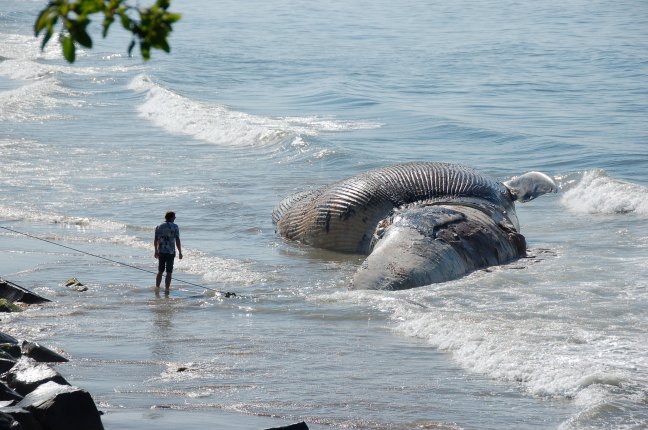
A man stands on a beach in front of a beached whale that has washed up on the shore

Going into 2019, I was a bit depleted creatively. I struggled with a long-form fiction project and was out of ideas. While I did not want to take any time off, I also did not feel inspired.

I remembered I had purchased a prompt book, Judy Davis’ A Writer’s Book of Days, while on vacation in Asheville, North Carolina, a few years earlier. It had sat on my shelf, unopened. I retrieved it and skimmed the intro and its basic premise: a prompt a day.

That could be a good New Year’s resolution, I thought. Daily prompt, no pressure, no editing, no time limit or word count, just the practice.

I kept at it and didn’t miss a day. I wrote longhand. By the end of the year, I had a stack of notebooks filled with potential stories.

In 2020, I used the notebooks as starting points, with a new resolution: 12 short stories from the prompts, one per month.

Time and Tide, newly published in MudRoom magazine, is April’s story, although the process was much longer than that:

  • April 2019: Original prompt
  • April 2020: First draft of the full story
  • April – December 2020: Two workshops with the SWIG writers’ group, plus additional helpful feedback from Robert Scott and Andrew Wagner
  • January 2021: Pitches, final revisions
  • February 2021: Publication

For more details, MudRoom editor Maiasia Grimes generously invited me to discuss the writing process in the magazine’s newest interview.

Thanks for reading!

Photo courtesy Sue & Danny Yee via Flickr Creative Commons

Short, to the Point

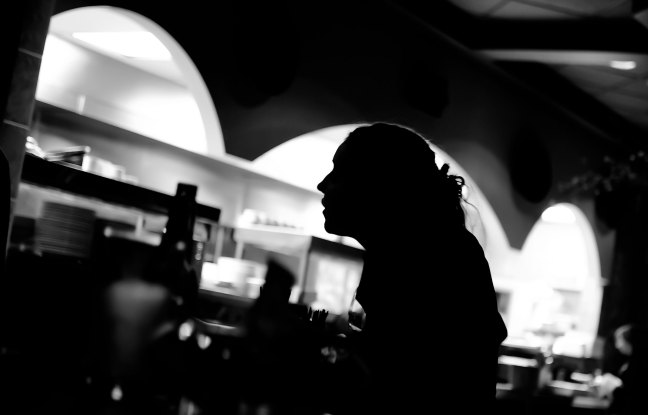
A waitress in a diner stands in profile silhouette in black and white

Thank you to the team at Levee Magazine for publishing my newest short fiction, Embolus.

A bit of process notes on this one: Embolus went through multiple revisions over the years and received mixed feedback, both from my writing workshops and editors at literary journals. It certainly mystified me as I worked on it. I knew I wanted a mood piece that spoke to something the main character considers unspeakable, something she knows but prefers as mystery. Something intimate and also foreign.

I’ll say little more, just that the timing of Embolus’ publication in Levee’s fifth issue, in the throes of the novel coronavirus, and the rash of high-profile diagnoses this week, seems a little too timely. Can we ever really acknowledge our vulnerabilities?

Photo courtesy Tyler B Dvorak via Flickr Creative Commons

The Ancients

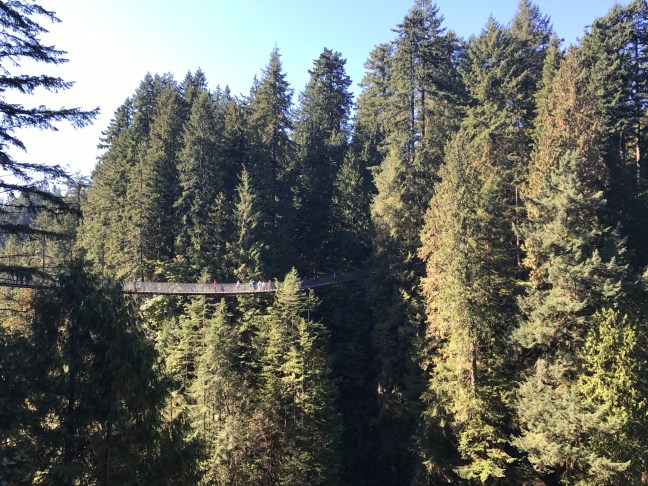
capilano_suspension_bridge_vancouver

In 2018, I traveled to Vancouver, B.C., and spent an afternoon at the Capilano Suspension Bridge. After a few hours crisscrossing between the treetops, we descended back to the ground to exit, and passed a display titled Our Biggest Guest.

It told the story of a November night in 2006, when a storm-felled Douglas Fir tree nearly took out the bridge, and the harrowing means to clear the giant: “The park had to be closed for 3 months in order for the tree trunk to be safely removed. With 17 tons of weight on the bridge, the trunk could not simply be lifted otherwise it would create a spring-like effect shooting the bridge, tree, and any one on it up into the air. Instead, small slices were removed one at a time while pulley systems carefully lifted and swung the remaining tree from its perch.”

This story was my main souvenir from the trip. From it came my newest short fiction, Arabesque, now available to read on Fiction Southeast, or check out the audio version on Audiomack.

Thanks for reading or listening!

Book of Days

cranes_overhead

In 2019, my New Year’s Resolution was to work on a writing prompt every day, using A Writer’s Book of Days by Judy Reeves as my guide. Whether I had five minutes or five hours, the goal was simply to make it a daily practice. I wrote longhand each day, sometimes in plain notebooks, other times in fancier leather-bound journals. I alternated between drugstore ballpoint pens and bold purple inks. I made it the whole year.

In 2020, my resolution has been to work through those prompt exercises like a miner, extracting useful nuggets, in an attempt to produce a polished short story each month. Nearly five months in, I’ve been keeping at it, although “polished” may be a relative term.

A bit of validation, though: I’m pleased to announce the first of my prompt stories has found a home. Check out my newest published fiction, Serotiny, in issue 6.1 of The Maine Review. (Interestingly, although perhaps not surprisingly, nearly nothing from the original prompt exercise made it into the final draft.)

Thanks to editor Rosanna Gargiulo for her thoughtful edits, as well as the incredible readers of SWIG and Andrew Wagner for their invaluable feedback.

As always, thanks for reading!

Photo courtesy Matthew Macy via Flickr Creative Commons

When Armchair Travel Isn’t Enough…

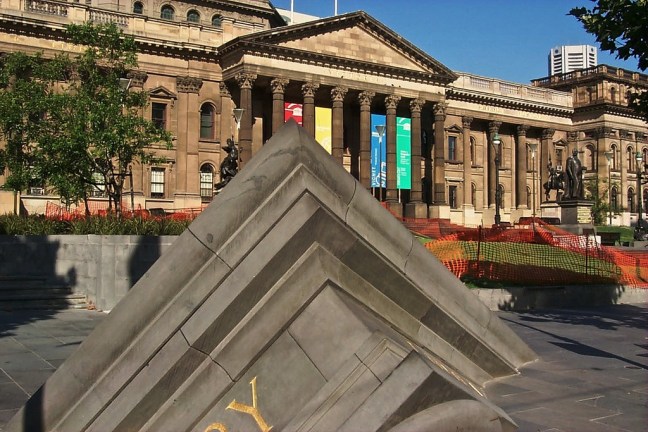
Australia State Library Melbourne

If you know me well, you know I love books and travel in equal measure. In fact, books often inspire my travels. So it was a great pleasure to research and write my newest travel story for Fodors, Beyond the Page: 10 Fascinating Destinations for Bookworm Globetrotters.

Given the ample options for our literary destinations, it was tough to narrow down the list to just 10 places, but my editors and I did it! Our literary locales include such far-flung places as Melbourne, nicknamed the City of Literature, and as close by as the Hotel Monteleone in New Orleans, a favorite author gathering spot that’s also featured in many a novel.

Take a look and, if you’re so inclined, drop me a line and tell me your favorite literary-inspired destination!

Read more

Photo courtesy s2art via Flickr Creative Commons

Read the First Chapter from Beneficiaries

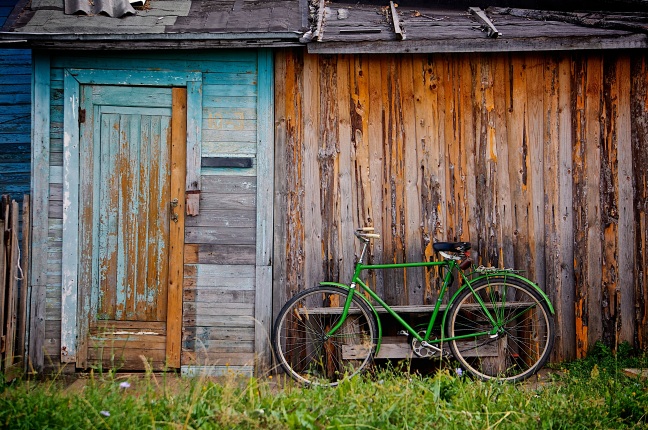
This photo shows a dilapidated barn with a green bicycle leaning against its front wall.

It seems I’ve taken an unexpected hiatus here on the blog, one I hope to remedy in the coming weeks and months. Why the hiatus? I’ve been working on other writing projects, including Beneficiaries, a novel in short stories.

I’m pleased to share that Embark, a literary journal for novelists, has included the first chapter of Beneficiaries in its second issue. Embark has a great premise in that they only publish the first pages of a novel, “those crucial first pages that must engage the reader’s attention and often receive more polishing than any other part of the book”, as they so eloquently put it.

Here’s the first glimpse of “Barnstorm”, aka Chapter One of Beneficiaries:

The barn was scheduled to come down that afternoon. The demo team had arrived early, however, and worked with efficiency and skill. Caroline watched them fill a dump truck for the third time in two hours and reverse back out to the road; the driver steered with caution. The monstrous truck bleated as though it were as small and vulnerable as a lamb, as if it wouldn’t easily crush any comers that dared to cross its path, even at this slow speed. Caroline sipped a cup of coffee at the kitchen sink, shifting her gaze from the truck to the new empty space now in front of her, noting how the barn’s footprint seemed so much larger, ironically, without it.
It had come down without a fuss, without any protests or resistance. It hadn’t been a lightning storm, or a Nor’easter, or termites that had done it in—though those had all taken their toll, of course. Rather, it had been the gradual soft rains of the past hundred and three years, the sea-salty air that exfoliated the barn’s support beams, the heavy snows that weighed the roof down like a pressure cooker. When the bulldozer came, it took only two hits for the entire structure to crumble like a wad of paper. Rick, the foreman, raised the crane to the roof and tapped, then raked the shovel across the shingles like a comb untangling a strand of knots. The barn’s north and west walls bowed to the ground. Rick pivoted the truck on its base and extended the shovel toward the southeast corner, as graceful as a lion going in for its last wound before a kill. A swift puncture to the base and the barn collapsed in on itself, the old timbers groaning as they fell; a moderate dust cloud rose as the boards settled onto the earth.


Want to read more? Check out the full chapter, as well as my Author Statement, over on Embark.

Photo courtesy Alexander Shustov on Unsplash

My Favorite

Like parents and children, writers aren’t supposed to have favorite works, right? Each piece holds its own special place, the result of a unique hybrid of ideas, experience, workshops, feedback, revisions, more revisions, pitches, and (hopefully) acceptance and publication. Each work is a snapshot of the writer at a particular moment in time, and reflects the writer’s state of mind up to and at that point. Writing is too subjective a process to rank what’s produced. How can one piece stand apart from the rest?

Yet having said that… my short story, Acquaintance, is my all-time favorite piece I’ve written. Originally part of a larger novel, it was able to be coaxed out and morphed into a smaller work. Sometimes you work on something big, only to find that distillation is what’s needed. In that case, while the effort and result may not be matched in volume or size, the alignment between labor and product lies (hopefully) in resonance and meaning.

Thanks, ink&coda journal, for publishing my favorite.

Read the full story here.

Photo courtesy Jonas Boni via Flickr Creative Commons